
 Facebook
 X
X
 Pinterest
 Copy Link
If you’ve never sold a home before, it’s easy to assume the process is… list it, show it, sell it.
Simple enough.
But in reality, there’s a rhythm to selling a home in Lancaster County—and understanding that rhythm ahead of time makes everything feel a lot more manageable.
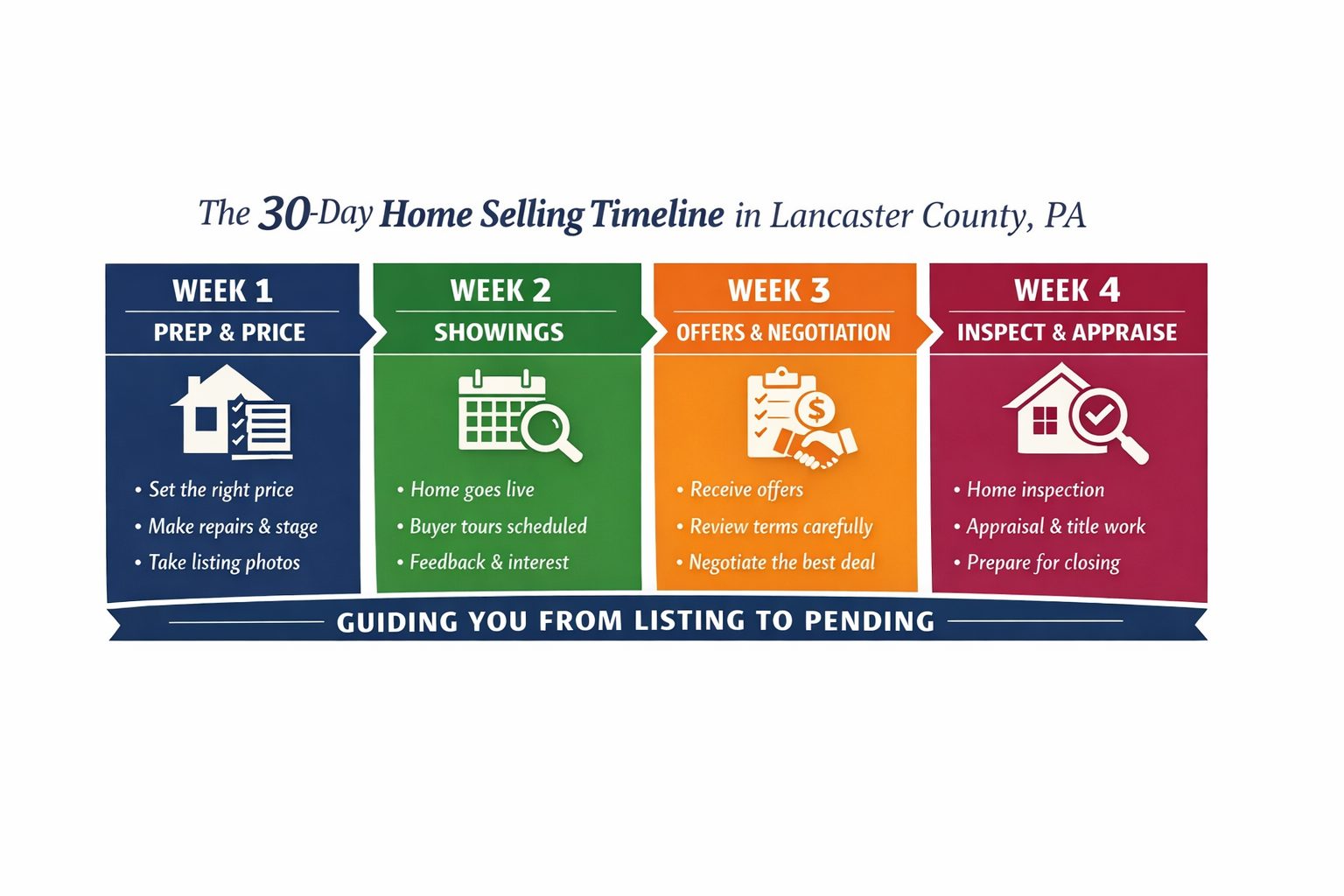
Here’s a realistic look at what happens in a typical 30-day stretch, from prep to going under contract (and what to expect along the way).
Week 1: Preparation + Pricing (Where Good Decisions Start)
Before your home ever hits the market, this is where the foundation is set.
What actually matters here:
- Pricing the home thoughtfully (not optimistically)
- Addressing small repairs that signal neglect
- Cleaning, decluttering, and creating a calm, neutral feel
- Deciding what’s worth fixing and what’s not
This week often gets rushed, but it shouldn’t.
Because the way your home enters the market has a direct impact on how it’s received.
A well-prepared home tends to attract stronger interest, better feedback, and ultimately, better offers.
Week 2: Going Live + Showings (First Impressions Matter)
Once your home is live, things move quickly in the Lancaster PA market.
You’ll likely experience:
- Initial interest and showing activity
- Feedback from buyers and agents
- A clearer sense of how the market is responding
This is where pricing and preparation start to speak for themselves.
If the home is well-positioned, you’ll usually see:
- Consistent showings
- Positive feedback
- Early signs of buyer interest
If not, the feedback will tell you that too—and it’s helpful information, not a setback.
Week 3: Offers + Negotiation (More Than Just Price)
If your home is getting traction, this is often when offers start to come in.
And here’s where a lot of sellers are surprised:
The highest offer isn’t always the strongest one.
You’ll want to consider:
- Financing strength
- Contingencies (home sale, inspections, timelines)
- Flexibility around closing
- Overall simplicity of the offer
A clean, predictable offer can often be more appealing than one that looks better on paper but introduces uncertainty.
The goal here isn’t just to accept an offer. It’s to choose the one that gets you to closing with the least amount of friction.
Week 4: Inspections, Appraisal + Moving Toward Closing
Once you’re under contract, you’re not done. But you’re on your way.
This phase typically includes:
- Home inspection (and possible repair negotiations)
- Appraisal ordered by the buyer’s lender
- Title work and finalizing paperwork
- Confirming timelines and preparing for closing
This is where things can feel a little uncertain, but most transactions move forward just fine.
The key is staying steady and responsive… not reactive.
Common Mistakes That Create Unnecessary Stress
A few things that tend to make the process harder than it needs to be:
- Overpricing at the start and having to adjust later
- Skipping prep work and hoping the market overlooks it
- Taking feedback personally instead of using it as data
- Focusing only on price and ignoring terms
- Expecting perfection instead of progress
Selling a home isn’t about getting everything exactly right.
It’s about making a series of thoughtful decisions that add up to a strong outcome.
Final Thought
A good home sale doesn’t feel chaotic.
It feels… steady.
Not because everything goes perfectly. Because you understand what’s happening and why.
In Lancaster County, the homes that sell best are usually the ones that are:
- Well-prepared
- Thoughtfully priced
- And guided with a clear plan
The goal isn’t to rush the process.
It’s to move through it with clarity so the decision you make holds up long after the closing table.
Frequently Asked Questions
How long does it take to sell a home in Lancaster County, PA?
On average a home go under contract within a couple weeks, but timing depends on pricing, condition, and market response.
Should I accept the first offer I get?
Not always, but early offers can be strong. It’s worth evaluating terms, not just timing.
What slows down a home sale the most?
Overpricing and lack of preparation tend to create the biggest delays.



