
 Facebook
 X
X
 Pinterest
 Copy Link
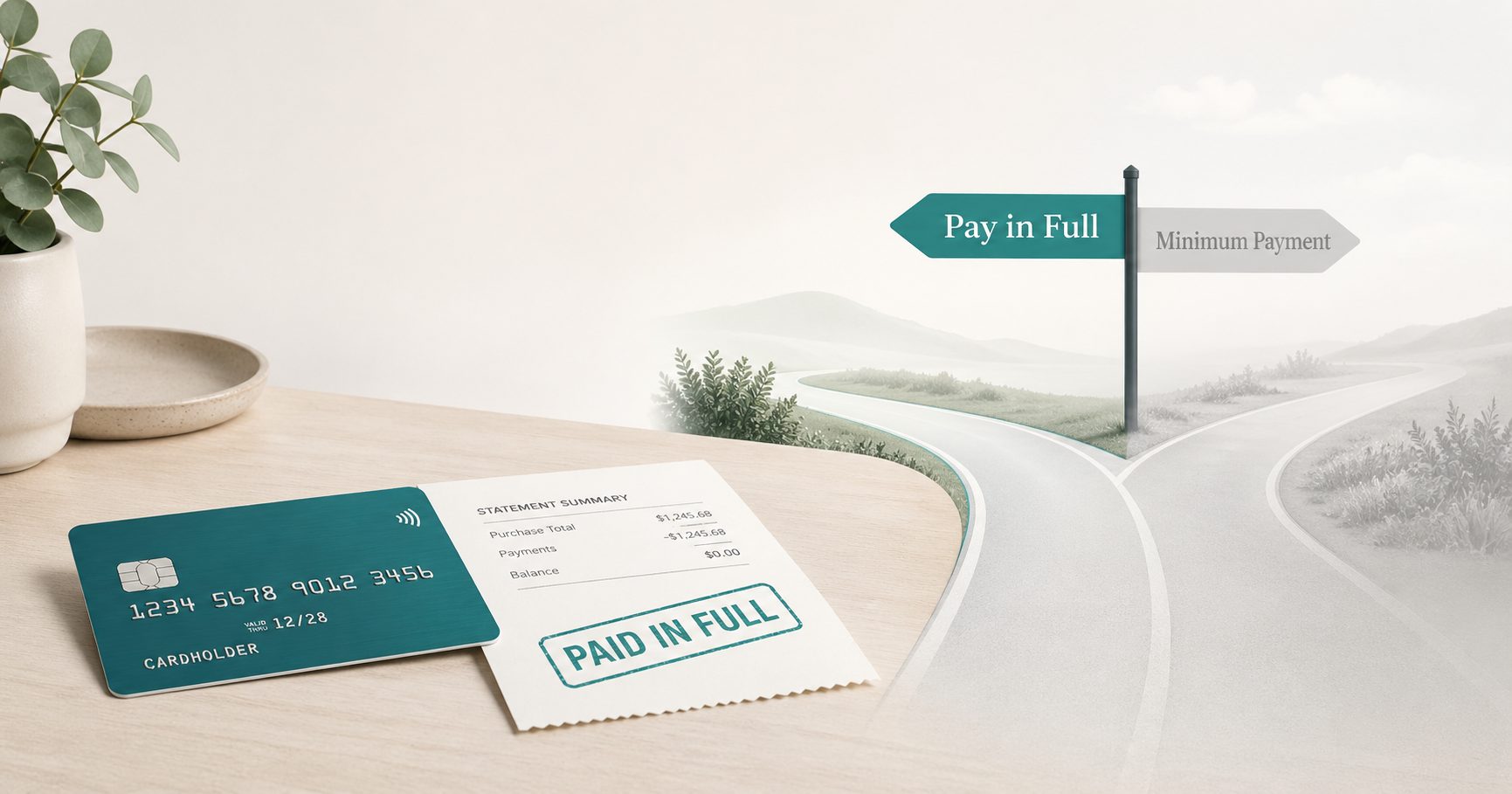
The real problem isn’t the card…it’s the behavior.
Credit cards get treated like villains in personal finance conversations. And I get it. People have real stories: surprise interest, balance creep, “How did it get this high?” moments.
But the truth is simpler (and more empowering):
Credit cards aren’t inherently bad tools.
They’re just brutally honest ones.
They magnify whatever habits you already have. Good or bad.
If you’re disciplined, they can be convenient, protective, and even rewarding.
If you’re stretched thin or spending emotionally, they can quietly turn one tough month into a long-term problem.
So let’s talk about the part most people avoid: behavior.
Two Types of Credit Card Users: Transactors vs. Revolvers
In the credit card world, there are basically two camps:
1) Transactors
These are people who use credit cards like a debit card—with benefits.
- They charge expenses
- They pay the statement balance in full
- They avoid interest entirely
- They might earn points, cash back, travel rewards, etc.
For transactors, the credit card company is basically providing convenience and perks… and hoping those perks tempt them into the other category.
2) Revolvers
Revolvers carry a balance from month to month.
Sometimes it starts innocently:
- “I’ll catch up next month.”
- “I had a big expense.”
- “I just needed breathing room.”
But then interest stacks, minimum payments feel manageable, and the balance becomes a quiet background stress that doesn’t go away.
Revolvers are where credit cards get their bad reputation, because that’s where credit card companies make their money.
Why Minimum Payments Trap People
Minimum payments are marketed like a life raft.
In reality, they’re more like a treadmill.
They’re designed to keep you paying, often for years, while interest does the heavy lifting in the background.
Here’s what happens:
- You charge $3,000
- The minimum payment might be around $75–$100 (varies)
- Interest accrues monthly
- Your payment mostly covers interest at first
- The principal barely moves
- If you keep using the card while carrying the balance, it’s even harder to get traction
This is why people feel like they’re “doing the right thing” by making payments… but still not getting ahead.
Minimum payments keep you current.
They do not keep you free.
The Clear Rule That Changes Everything
If you only take one thing from this post, make it this:
Don’t swipe if you can’t pay it off.
Not “eventually.”
Not “when my bonus hits.”
Not “after this busy season.”
If the money isn’t already in your plan, the credit card isn’t a solution. It’s a delay.
And delays come with interest.
A simple way to check yourself before you swipe
Ask:
- “If this purchase hit my checking account today, would I still do it?”
- “Is this already in my budget, or am I borrowing from future me?”
- “Am I buying this because I need it… or because I’m stressed/tired/celebrating?”
That tiny pause is where financial wisdom lives.
Credit Cards Can Be Useful (When You Use Them Like a Tool)
When used correctly, credit cards actually support good decision-making:
- Fraud protection and dispute resolution
- Easier tracking of spending categories
- Rewards for purchases you already planned to make
- Building credit history (with responsible use)
But they only stay helpful when you’re in the driver’s seat.
Once you’re swiping to “make life work,” the card becomes less of a tool and more of a pressure valve. Pressure valves eventually pop.
The Bigger Point: This Is About Stewardship
I talk a lot about stewardship because the best decisions aren’t just about getting through today.
They’re about making choices your future self can live with.
Credit cards don’t ruin people.
Lack of clarity does.
If you treat a credit limit like extra income, it will cost you.
If you treat it like a convenience you pay off monthly, it will serve you well.
And if you’re already carrying balances, please hear this with zero judgment: you’re not “bad with money.” You’re human. The system is designed to make revolving feel normal.
But you can also redesign your habits.
Small rule. Big impact:
Don’t swipe if you can’t pay it off.
Because the house matters… but the decision matters more.



