
 Facebook
 X
X
 Pinterest
 Copy Link
1) SEO-Friendly Title
What Lancaster County Buyers Forget to Budget For Besides the Mortgage
Who It’s For
Buyer / Planner
3–5 Bullet Outline Points
- The true monthly cost of homeownership in Lancaster County
- Why older Lancaster homes can surprise buyers with maintenance costs
- Utility differences between townhomes, farmhouses, and suburban developments
- The “move-in spiral” that quietly wrecks budgets
- A simple framework for deciding what you can comfortably afford
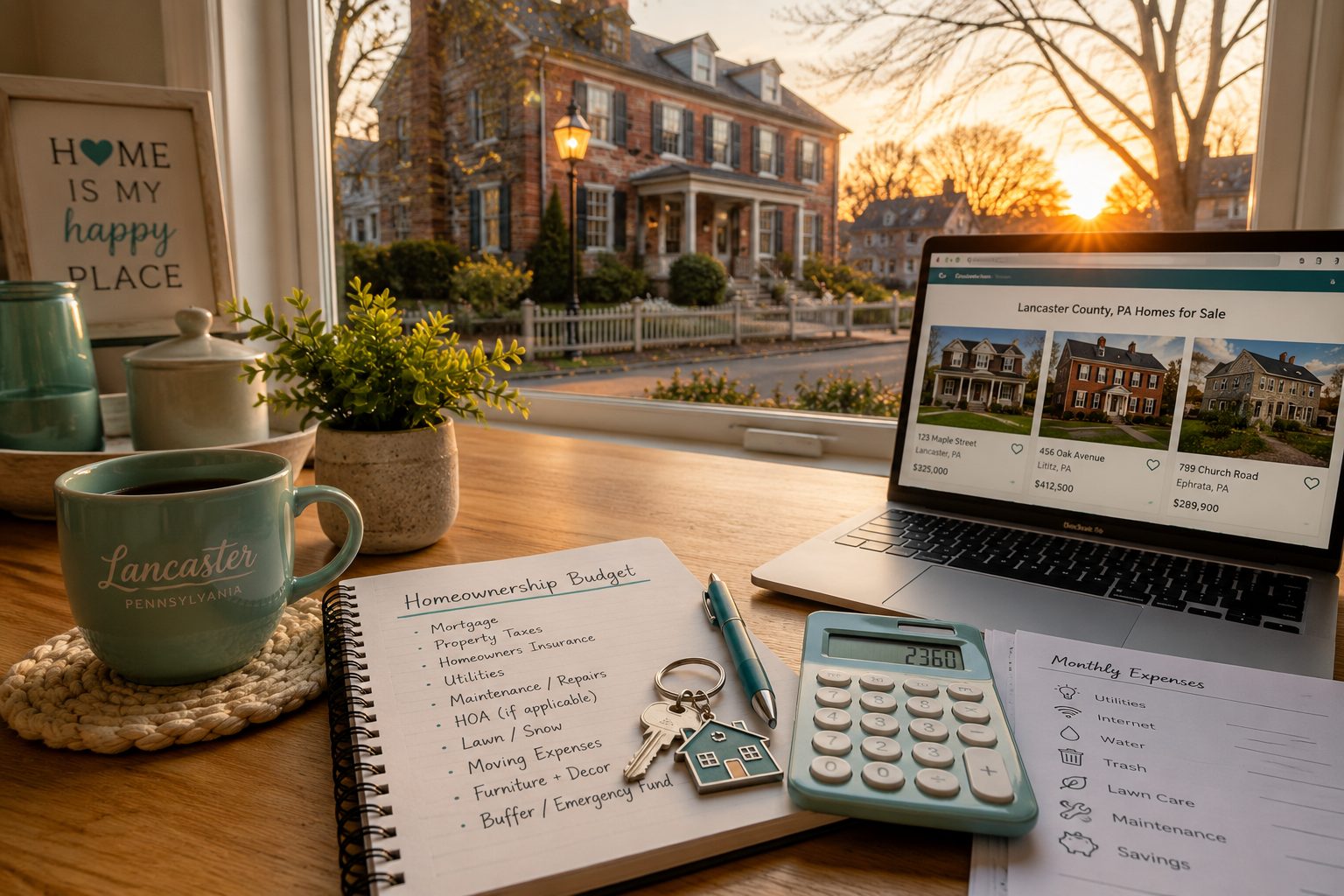
Featured Image


6–10 SEO Tags/Keywords
Lancaster County PA real estate, buying a home in Lancaster County PA, Lancaster PA housing market, first time home buyer Lancaster PA, Lancaster County homeownership costs, moving to Lancaster PA, Lancaster PA Realtor, home buying budget tips, Lancaster County homes, Lancaster Homegirl
Meta Description / Snippet
Buying a home in Lancaster County is about more than the mortgage payment. Here’s what smart buyers should actually budget for before they fall in love with the house.
Facebook Business Page Caption
One of the biggest mistakes I see buyers make in Lancaster County?
They budget for the mortgage… but not for the life that comes with the house.
This blog breaks down the real costs people forget to plan for, especially when buying older Lancaster homes, moving from renting, or stretching their budget too thin trying to “win” the perfect house.
The goal is not just buying a house. The goal is still enjoying your life after you own it.
Read here 👇
What Lancaster County Buyers Forget to Budget For Besides the Mortgage
There is a moment in almost every home search where logic quietly leaves the group chat.
Maybe it happens in the kitchen with the exposed brick wall. Maybe it happens when you walk into the backyard and mentally place your future patio furniture before you even know what the taxes are.
I get it. Lancaster County has a way of making people emotional about houses. Historic charm will do that to a person.
But one of the biggest financial mistakes buyers make is assuming the monthly mortgage payment tells the whole story.
It does not.
The monthly payment matters, of course. But homeownership has a lot of smaller moving pieces that can sneak up on people if they are only focused on what the lender says they are approved for.
And honestly? The decision matters more than the house.
A smart purchase should improve your life, not quietly stress you out every month afterward.
So let’s talk about the costs Lancaster County buyers commonly forget to budget for.
1. Older Homes Often Mean Higher Maintenance
Lancaster County has some absolutely beautiful older homes. Stone farmhouses. Brick colonials. Charming city homes with original hardwood floors and character for days.
But charm occasionally comes with “surprise plumbing issue energy.”
Older homes can require:
- Electrical updates
- Roof repairs
- Window replacement
- Masonry work
- HVAC upgrades
- Higher utility costs due to insulation differences
That does not mean you should avoid older homes. Not at all.
It just means you should buy them with open eyes and a realistic maintenance budget.
A home inspection helps identify current concerns, but even a well-maintained home will eventually need attention. Houses are less like iPhones and more like living organisms. They constantly need little things.
A good rule of thumb is to keep a separate homeowner reserve fund after closing. Not because something terrible is guaranteed to happen, but because eventually something always happens.
Usually at the least convenient time possible.
2. Your Utility Bills Might Change More Than You Expect
This surprises people all the time.
Someone moves from a newer apartment into a detached home and suddenly realizes they are now heating:
- More square footage
- Multiple floors
- Older windows
- A garage
- Maybe even a finished basement
Lancaster County also has a huge mix of housing styles, which means utility costs vary wildly from one property to another.
A townhouse in Manheim Township will feel very different financially than a farmhouse outside Lititz or an older Lancaster City row home.
Before buying, ask:
- What are the average utility costs?
- Is the home electric, oil, propane, or natural gas?
- How old is the HVAC system?
- Are there supplemental systems like pellet stoves or mini-splits?
These are not boring questions. These are “future you will be grateful” questions.
3. The Move-In Spiral Is Real
Here is how it starts.
“I just want to paint.”
Then suddenly:
- You are replacing light fixtures
- Ordering bar stools
- Buying rugs
- Upgrading curtains
- Getting patio furniture
- Buying storage bins
- Spending $400 at Target without fully understanding how it happened
Moving has a sneaky way of creating constant “little” purchases that add up fast.
This is especially common when buyers stretch financially to get into the house itself and then realize they still need to furnish or personalize the space.
You do not need to complete the house in the first 30 days.
Actually, you probably should not.
Live in the house first. Learn how you use the space. Figure out what actually matters before panic-buying decorative baskets because social media convinced you that every laundry room needs an aesthetic theme.
4. Your Monthly Payment Is Not Your Comfort Level
This one matters a lot.
Just because a lender approves you for a number does not mean you should spend it.
A comfortable payment is different for everyone.
Some people prioritize travel. Some want flexibility. Some want aggressive retirement savings. Some are self-employed and prefer more breathing room month-to-month.
The “right” budget is not just about qualifying. It is about lifestyle sustainability.
I have had buyers intentionally spend less than they could because they wanted:
- Less financial pressure
- Flexibility for future plans
- Easier maintenance
- More freedom to enjoy life
Honestly, those are often the happiest buyers six months later.
5. Think Beyond the Purchase
The smartest buyers I work with are not just asking:
“Can I buy this house?”
They are asking:
“Will this house still fit my life in 3 to 5 years?”
That question changes everything.
Maybe the perfect decision is:
- Buying slightly below budget
- Choosing lower maintenance
- Staying closer to work
- Prioritizing resale flexibility
- Waiting another six months
- Choosing a home that supports your long-term goals instead of impressing strangers online
That is stewardship.
And good real estate decisions usually look a lot less flashy than social media would have you believe.
But they create a much more peaceful life.
If you want to dive deeper into this, message me. I’m always happy to share what I’m seeing locally and help people think through the decision side of real estate, not just the house side.



